● Online
How Long Does It Take to Build a Site?
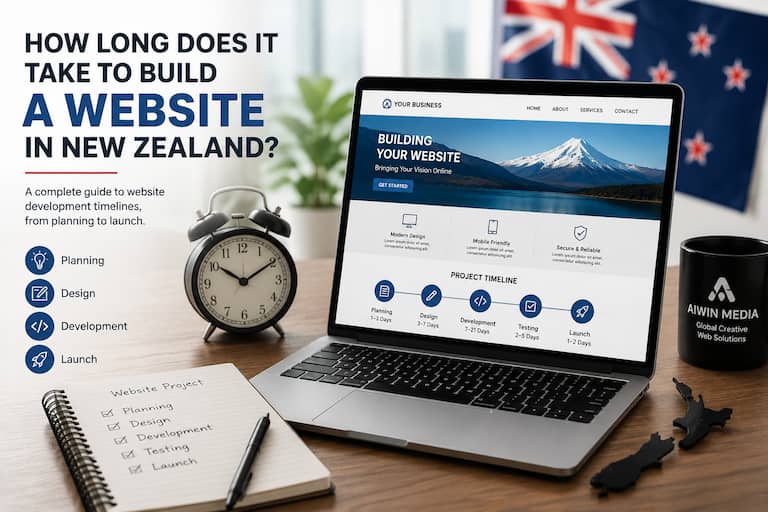
How Long Does It Take to Build a Website in New Zealand?
A simple business website can often be completed relatively quickly, while a larger eCommerce website or custom web application may require considerably more development and testing.
In this guide, we explain the typical website development process and what can affect the time required to launch a professional website.
How Long Does a Website Usually Take to Build?
There is no single timeframe that applies to every website. Every business has different requirements.
As a general guide:
-
Small business website: around 1–2 weeks
-
Medium-sized business website: around 2–4 weeks
-
eCommerce website: around 4–8 weeks or more
-
Complex custom website: several months depending on requirements
These are general estimates. The actual timeframe can change depending on the design, content, functionality and communication between the client and development team.
If you would like to know more about Aiwin Media’s affordable website design packages,
Please click GET A QUOTE
What Affects Website Development Time?
Several important factors determine how quickly a website can be completed.
1. Website Size
A website with five or six pages will generally take less time than a website with 30 or 50 pages.
A typical small business website may include:
-
Home
-
About Us
-
Services
-
Projects or Portfolio
-
Blog
-
Contact
Larger websites may require additional service pages, location pages, team pages, landing pages and other sections.
2. Website Design
The design process can also affect the development timeline.
A website using a simple and professional layout may be completed faster than a highly customised website with unique animations, interactive sections and complex visual elements.
A good website should not only look attractive but also provide an easy experience for visitors on desktop, tablet and mobile devices.
3. Content
Content is one of the most common reasons website projects take longer than expected.
Before development can be completed, the website may need:
-
Page content
-
Business information
-
Service descriptions
-
Images
-
Logo
-
Contact details
-
Product information
-
Blog content
Having your content and images ready can help the project move forward much faster.
4. Website Functionality
The functionality required on a website has a major impact on development time.
For example, a basic contact form is relatively straightforward. However, a website requiring:
-
Online booking
-
Customer registration
-
Member login
-
Payment processing
-
eCommerce
-
Database functionality
-
Customer dashboards
-
Third-party integrations
may require additional development and testing.
Typical Website Development Timeline
A professional website normally goes through several stages before launch.
Step 1: Planning
The first stage is understanding the business, target customers, services and goals of the website.
This is where the website structure and required pages are planned.
Step 2: Website Design
The next stage is creating the visual design.
This includes the layout, colours, typography, images, navigation and overall appearance of the website.
The design should reflect the business and make it easy for visitors to find the information they need.
Step 3: Development
Once the design is approved, the development work begins.
The website is built using technologies such as HTML, CSS, JavaScript and PHP or other suitable development technologies.
At this stage, features such as contact forms, menus, databases, booking systems and other functionality can be implemented.
Step 4: Mobile Optimisation
A modern website needs to work properly on different screen sizes.
The website is tested and adjusted for:
-
Desktop computers
-
Laptops
-
Tablets
-
Smartphones
Mobile-friendly design is particularly important because many customers now access business websites using their phones.
Step 5: SEO Setup
Search engine optimisation should be considered during website development rather than only after the website has launched.
Important SEO elements can include:
-
Page titles
-
Meta descriptions
-
Heading structure
-
Search-friendly content
-
Image optimisation
-
Internal links
-
Mobile performance
-
Website speed
-
Search engine indexing
A well-structured website provides a better foundation for future SEO work.
Step 6: Testing
Before launch, the website should be carefully tested.
This can include checking:
-
Contact forms
-
Links
-
Images
-
Navigation
-
Mobile responsiveness
-
Browser compatibility
-
Page loading
-
Website functionality
Testing helps identify problems before customers see the website.
Step 7: Launch
Once everything has been checked and approved, the website can be published.
After launch, ongoing updates, security, backups, SEO and content improvements can help keep the website performing well.
How Long Does a Small Business Website Take?
For many small businesses in New Zealand, a professional website may take approximately 2–4 weeks, depending on the requirements.
A simple website with a limited number of pages and ready-to-use content can often move through the process quickly.
However, adding custom functionality, additional pages, extensive content or multiple revisions can increase the timeframe.
The goal should not simply be to build a website as quickly as possible. The website should be properly planned, designed, developed and tested.
How Long Does an eCommerce Website Take?
An eCommerce website normally requires more development than a basic business website.
An online store may need:
-
Product pages
-
Shopping cart
-
Checkout
-
Payment gateway
-
Customer accounts
-
Shipping options
-
Order management
-
Product categories
-
Stock management
-
Email notifications
Because of these additional requirements, an eCommerce website may take 6–12 weeks or more, depending on the size and complexity of the project.
Can a Website Be Built Faster?
Yes, but speed should not come at the expense of quality.
One of the best ways to reduce development time is to prepare everything before development begins.
Businesses can help by providing:
-
Logo and branding
-
Website content
-
Business information
-
Images
-
Contact details
-
Service information
-
Product information
-
Examples of websites they like
Clear communication and timely feedback can also help prevent unnecessary delays.
Why Good Website Planning Matters
A website is often the first place potential customers learn about a business.
A rushed website can result in poor navigation, unclear information, slow performance or an inconsistent design.
Good planning helps ensure that the website:
-
Represents the business professionally
-
Works well on mobile devices
-
Is easy for customers to navigate
-
Has a clear structure
-
Provides useful information
-
Supports search engine optimisation
-
Can be updated as the business grows
Taking the right amount of time to build the website can produce a much better long-term result.
Choosing a Website Development Company in New Zealand
When choosing a web design and development company, don't look only at the estimated completion date.
Consider the company's:
-
Previous website projects
-
Design and development experience
-
SEO knowledge
-
Communication
-
Support after launch
-
Understanding of your business
-
Ability to provide custom functionality
A professional website should be viewed as a long-term investment rather than simply a one-time project.
Build Your Business Website with Aiwin Media
At Aiwin Media, we provide professional web design and development services for businesses looking to build a strong online presence.
We work with businesses in Hamilton, Waikato and across New Zealand, creating websites designed around their business goals and customers.
Our services include website design, web development, eCommerce solutions, SEO and digital marketing.
Whether you need a simple business website or a more customised solution, we can help you plan and develop a website that is professional, mobile-friendly and ready for future growth.
Ready to Build Your Website?
If you are planning a new website or want to improve your existing website, get in touch with Aiwin Media to discuss your requirements.
Ready to grow your business online? Get in touch with Aiwin Media today for a free website design quote.