● Online
Small Business Website Checklist NZ
What Should a Small Business Website Include? A Complete Checklist
A professional website helps customers understand your business, explore your services and contact you with confidence. For small businesses in New Zealand, a website can also improve online visibility and create opportunities to attract new customers.
However, simply having a website is not enough. Your website should provide useful information, work well on mobile devices and make it easy for visitors to take the next step.
In this guide, we explain the essential features every small business website should include.
1. A Clear and Professional Homepage
Your homepage is often the first page visitors see. It should clearly explain what your business does, who your customers are and how your services can help them.
Include a clear heading, a short introduction, your main services and a visible contact or Get a Quote button. Use professional images and keep the layout simple so visitors can find important information quickly.
2. An About Us Page
Customers often want to know who they are dealing with before making a purchase or requesting a service.
Your About Us page should introduce your business, explain your experience and communicate what makes your services valuable. Use genuine information about your company, team and approach to build trust.
3. A Services or Products Page
Explain each service or product clearly so visitors understand what you offer.
If your business provides multiple services, consider giving each major service its own page. This helps customers find relevant information and gives you more opportunities to create useful content for search engines.
Include service descriptions, key benefits, relevant images and a clear way to enquire.
4. Easy-to-Find Contact Information
Make it simple for potential customers to contact your business.
Your Contact page should include the appropriate business phone number, email address, location or service area, and an enquiry form if needed. For local businesses, accurate location and contact information can also help customers understand where you operate.
Check that all contact details are correct and that enquiry forms work properly.
5. Mobile-Friendly Website Design
Many people browse websites using smartphones and tablets. Your website should adjust to different screen sizes and remain easy to navigate.
Use readable text, appropriately sized buttons, clear menus and images that fit the screen. Test important features, such as contact forms and quote buttons, on mobile devices.
A responsive website provides a better experience for visitors using different devices.
6. Basic Search Engine Optimisation (SEO)
Search engine optimisation helps search engines understand your website and can improve its visibility for relevant searches.
Useful SEO practices include writing unique page titles and meta descriptions, organising content with clear headings, using descriptive image alt text and creating helpful content that answers customers' questions.
For local businesses, clearly identifying the services you provide and the areas you serve can also help visitors understand whether your business meets their needs. Rankings are not guaranteed, but a well-structured website provides a strong foundation.
7. Customer Reviews and Testimonials
Genuine customer reviews can help potential customers assess your business before contacting you.
Where appropriate, include authentic testimonials, relevant project examples or case studies. Always obtain permission before publishing customer information or photographs, and never create fake reviews.
8. Website Security and Privacy
Your website should use HTTPS with a valid SSL/TLS certificate to help protect information exchanged between visitors and your website.
Keep your website software updated, use strong passwords and maintain appropriate backups. If you collect personal information through enquiry forms, explain how that information is handled and provide a suitable privacy policy.
9. Clear Calls to Action
Visitors should know what to do when they are ready to take the next step.
Use clear calls to action such as “Get a Quote,” “Contact Us,” “Book a Consultation” or “View Our Services.” Place these where they are useful without overwhelming visitors with too many competing buttons.
Make sure each button leads to the correct page or working form.
10. Ongoing Website Maintenance
A business website needs regular attention after launch. Review your contact details, service descriptions, prices and business information to ensure they remain accurate.
Check that links and enquiry forms work, update software when necessary, maintain backups and monitor website performance. Regular maintenance helps keep your website useful and reliable.
Final Checklist for Your Small Business Website
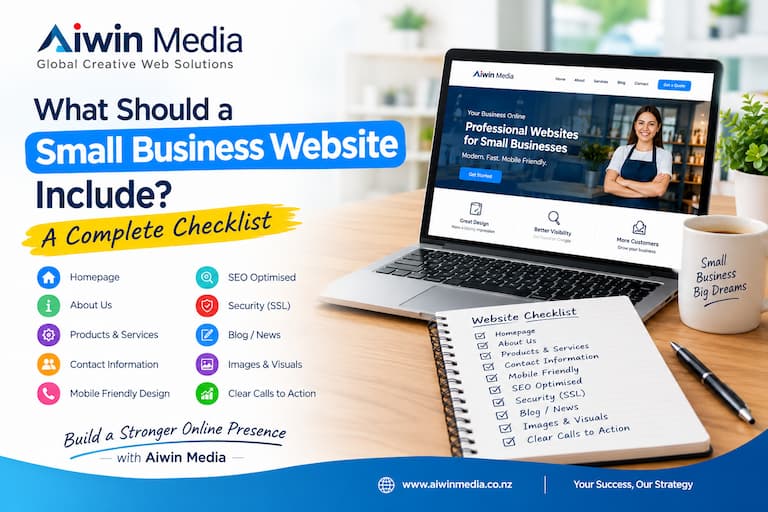
Before launching or updating your website, check that it includes:
-
A clear and professional homepage
-
An informative About Us page
-
Detailed services or product information
-
Accurate contact details and a working enquiry form
-
Responsive mobile-friendly design
-
Basic SEO and helpful content
-
Genuine testimonials or project examples, where available
-
HTTPS and appropriate privacy information
-
Clear calls to action
-
Regular maintenance and backups
Need Help Building Your Business Website?
A well-planned website makes it easier for customers to understand your business and contact you. Focus on providing useful information, a simple browsing experience and clear next steps.
Aiwin Media provides website design and development solutions for businesses in Hamilton, Waikato and across New Zealand. If you need a new business website or want to improve your existing one, visit our Web Design Hamilton page or contact our team to discuss your requirements.